ZeusJupiter
King of the gods, ruler of the sky, weather, thunder, law and universal order.
Sky, thunder, lightning, storms, justice, law, statecraft, sworn oaths, hospitality (xenia), kingship.A living archive of antiquity
King of the gods, ruler of the sky, weather, thunder, law and universal order.
Enter the archive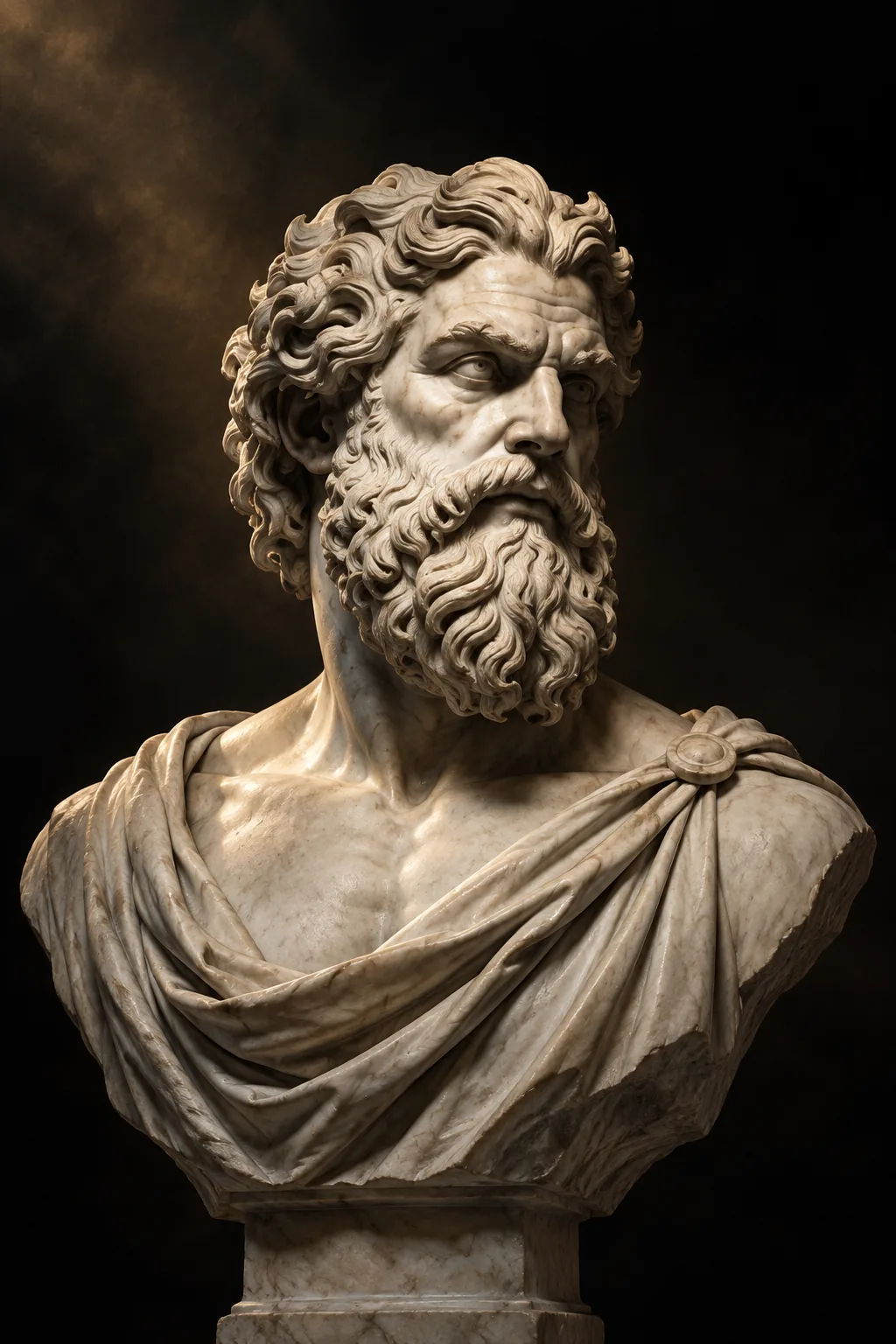
Sacred lineage
Explore the divine family from Gaia and Uranus through the Titans to Olympus. Greek genealogies provide a framework, while Roman gods retain distinctive cults, histories and civic roles.
Explore the family treeNew to the pantheon?
Compare Greek and Roman names, domains and interpretations, then explore the stories behind them.
Read the essential guide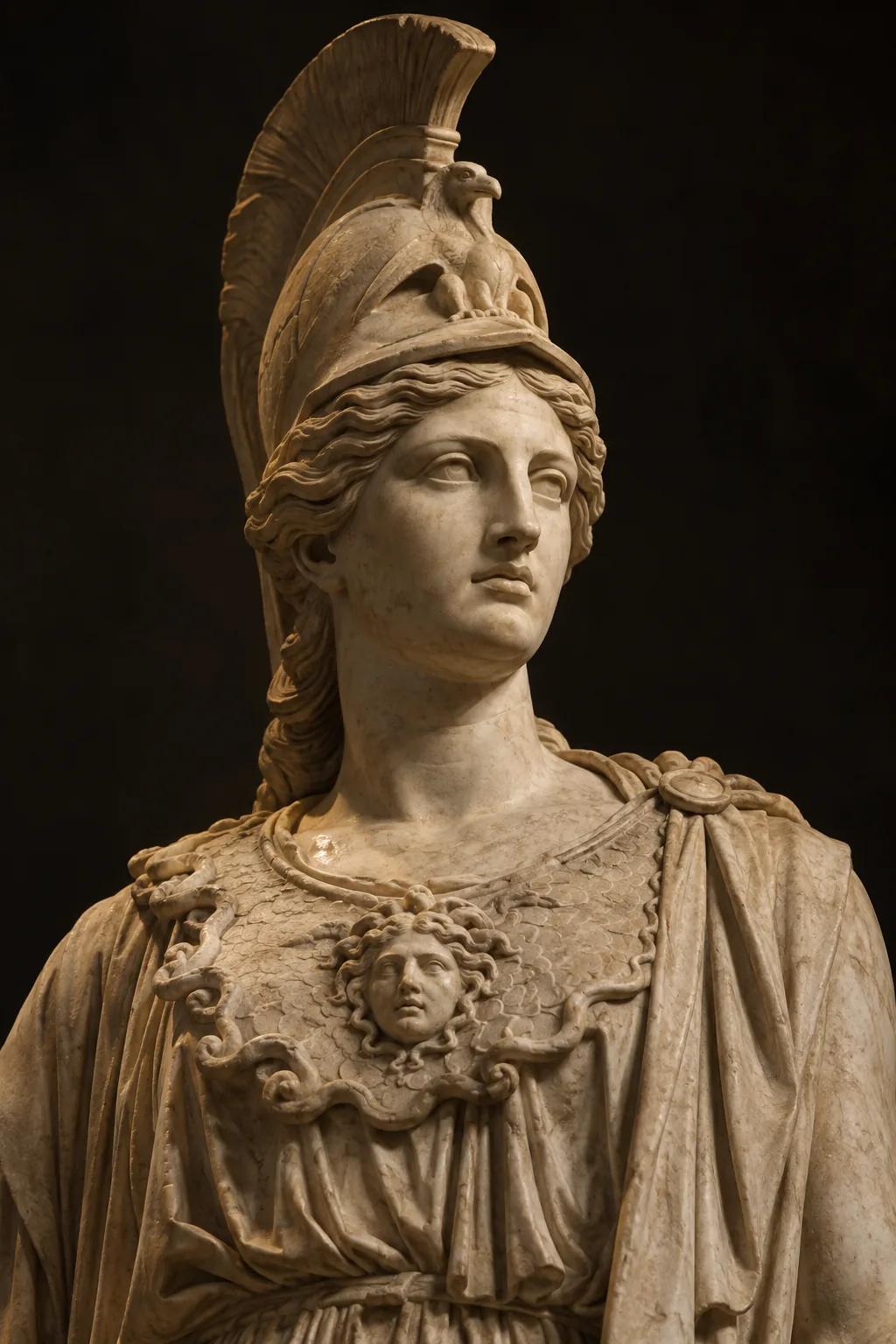
Index of divinities
52 entries
King of the gods, ruler of the sky, weather, thunder, law and universal order.
Sky, thunder, lightning, storms, justice, law, statecraft, sworn oaths, hospitality (xenia), kingship.Queen of the gods; goddess of marriage, women, childbirth, political counsel and the Roman state.
Marriage, queenship, family sanctity, women, childbirth (Juno Lucina), the state treasury and its warning (Juno Moneta), the vital force of every woman.Lord of the sea, earthquakes, storms, freshwater springs and horses.
Oceans and seas, seismic tremors and earthquakes ('Earth-Shaker'), freshwater and springs (original Roman role), marine life, navigation, horses and horse-racing.Lord of the underworld, ruler of the dead, guardian of subterranean mineral wealth.
The underworld, the dead, funeral rites, the unseen, subterranean riches, metals, gems, and (as the seed-corn buried in the soil) the coming harvest.Goddess of wisdom, tactical warfare, craftsmanship, justice and civic intellect.
Strategic and defensive warfare, wisdom, reason, diplomacy, weaving, pottery, metallurgy, philosophy, civil justice, the trade guilds, heroes.God of war, physical aggression, military discipline and the protection of the Roman people.
Warfare, martial valour, bloodshed (Ares); the protection of fields, borders and the state, and originally agriculture and spring (Mars).Goddess of love, beauty, desire, procreation, and the divine ancestry of Rome.
Love, erotic desire, physical beauty, fertility, gardens, maritime prosperity (Venus Erycina), military victory (Venus Victrix), and the dynastic motherhood of Rome (Venus Genetrix).God of light, music, poetry, prophecy, healing, plague, archery, truth and reason.
Music and lyric poetry, divine prophecy and oracles, archery, light and the sun (later), disease and healing, truth, moderation, the protection of young men, herds.Virgin goddess of the hunt, wild nature and animals, the moon, chastity and childbirth.
Wilderness and mountains, hunting, wild beasts, virginity, the transitions of young girls, the moon, archery, and (despite her virginity) relief in childbirth.God of fire, metallurgy, craftsmanship, volcanoes and industrial skill.
Blacksmithing, metalwork, sculpture, technology, constructive and (especially, in Rome) destructive fire, volcanoes, armour-making.Messenger of the gods; god of commerce, travellers, roads, thieves, eloquence and the guiding of souls.
Trade and profit, merchants, travel and roads, boundaries, thievery and deceit, luck, eloquence and language, sleep and dreams, and the role of psychopomp guiding the dead to the underworld; herdsmen and flocks.Virgin goddess of the hearth, the sacred flame, the home and the continuity of the state.
The domestic hearth and its fire, cooking, family unity, and above all the communal sacred flame of the city on which its survival was believed to depend.Goddess of grain, agriculture, the harvest, maternal love and the fertility of the earth.
Grain and its cultivation, bread, the fertility of the soil, the harvest, motherhood, sacred law (Demeter Thesmophoros), and the political rights of the common people.God of wine, ritual ecstasy, theatre, madness, fertility, rebirth and liberation.
Wine and the vine, intoxication, ecstatic dance and frenzy, the theatre and drama, religious rapture, vegetation and fertility, liberation from social restraint, death and resurrection.Queen of the underworld and maiden goddess of spring growth and the seasonal cycle.
Spring vegetation and the growing grain (as Kore); the underworld and the souls of the dead (as Queen); the cycle of death and rebirth; agriculture.Titan of time, agricultural bounty, generational succession and a lost Golden Age.
(Greek) time, the harvest, the violent passage of power between generations; (Roman) sowing and seed-corn, wealth, and a mythical age of peace, equality and plenty.Titan mother-goddess of the fertile earth, abundance, motherhood and generation.
(Greek) fertility, motherhood, the flow of generation; (Roman) plenty, stored grain, wealth and an abundant harvest.Primordial personification of the sky; the first ruler of the cosmos.
The sky and heavens themselves; the first sovereign power over the universe.Primordial personification of the Earth; the universal mother from whom nearly all gods descend.
The Earth itself and all life that springs from the ground; oaths; prophecy - the first oracle at Delphi was hers before Apollo took it.Archaic Italian pair of fertility gods of the vine, the seed and human increase, and of personal and civic freedom.
Viticulture and wine, the male life-force and fertile seed (Liber); female growth and the underworld maiden (Libera); libertas - both political liberty and release through wine.God of erotic love, desire and romantic attraction; in cosmic versions, the primal force that draws all things together.
Sexual love, uncontrollable passion, emotional longing, fertility, desire; (cosmically) the attractive force that makes creation possible.Winged goddess of victory in war, athletics and imperial success.
Victory in battle, triumph, success in athletic and artistic contests, fame, imperial dominance.Goddess of discord, strife, chaos, jealousy and rivalry.
Strife, conflict, civil discord, jealousy, the chaos of the battlefield; also, in Hesiod, the healthy competitive rivalry that spurs people to work.Goddess of luck, chance, fate and unpredictable destiny.
Fortune good and bad, chance, sudden prosperity and sudden ruin, fertility, fate, and the steering of the course of individual and civic lives.Two-faced god of beginnings, gates, doorways, transitions, time and endings.
Doorways and gates (ianuae), beginnings and endings, transitions and passages, the start of any undertaking, the state of war or peace, the turn of the year (January).God of sleep, slumber and rest.
Sleep, rest, dreams, the unconscious state, relief from physical and emotional suffering.Personification of peaceful, inevitable, non-violent death.
Natural, gentle death and mortality, as distinct from slaughter in battle (the domain of the Keres); the final rest that comes when a life is complete.Goddess of the dawn, morning light, dew and daily awakening.
The dawn, first light, dew, and the heralding of the rising sun.God of the physical sun, celestial radiance, sight and the measuring of time.
The physical sun and daylight, all-seeing surveillance, truth, the witnessing of oaths, and (via Sol Invictus) the protection of the Roman military state.Goddess of the physical moon, nocturnal light and the monthly cycle.
The moon, night-time light, the lunar month and calendar, fertility, tidal rhythms.Horned god of the wild, flocks, forests, prophecy and rustic music.
Wilderness, woods and pastures, shepherds and flocks, fertility, prophecy, panic fear, and the rustic pipes.The greatest hero; a mortal son of Jupiter raised to godhood, embodiment of strength and endurance.
Strength, heroic effort, endurance, courage; protector of the weak, of travellers and of the gymnasium; averter of evil; commerce, victory and sworn good faith (Rome).God of medicine and healing; a deified physician.
Medicine, healing, physicians, recovery from illness, and health-giving sleep.The Great Mother; an Anatolian mountain-goddess of wild nature, wild animals and the protection of the state.
Wild nature and mountains, wild animals (especially lions), fertility, cities and their walls, and the protection of Rome in war.Titan goddess of motherhood and modesty; mother of Apollo and Diana.
Motherhood, modesty, the protection of the young; associated with wolves and with the night.Primordial goddess of the night and mother of many grim powers.
Night and darkness, and the dread and mystery bound up with them.The three goddesses who spin, measure and cut the thread of every life.
Destiny, the allotted span of each life, the unchangeable future, birth and death.Avenging underworld goddesses who punish crimes against blood-kin and the sacred order.
Vengeance, above all for the murder of a family member, and for perjury, offences against parents and guests, and the violation of natural law; curses; the guilty conscience.The nine goddesses of inspiration in poetry, music, dance and learning.
Epic and lyric poetry, history, music, tragedy, comedy, sacred hymns, dance and astronomy - the whole range of the arts and sciences.The Titan who defied the gods to give humankind fire and the arts of civilisation.
Forethought, cunning craft-intelligence, the benefaction of humanity; fire, technology and the crafts.The Titan condemned to hold up the sky for all eternity.
Endurance; astronomy and the fixed heavens; a guardian of the pillars separating earth and sky.God of the cold north wind; bringer of winter.
The north wind, winter, cold storms; and, for the Athenians, protection against enemy fleets.God of the gentle west wind; herald of spring.
The west wind, spring breezes, new growth and flowers.Keeper of the winds; the warden appointed to pen and release the storm-winds.
The winds as a group, which he keeps locked up and releases only on the gods' command; islands; horse-taming.Goddess of the open sea; queen and consort of the sea-god.
The sea itself, especially the deep salt water and its calm; salt springs; and, as queen, the whole marine realm.Fish-tailed sea-god; herald and trumpeter of the ocean.
The waves and their sound; calming or rousing the sea with his conch-shell trumpet; a messenger of the deep.Goddess of flowers, blossom, spring and flowering plants.
Flowers and blossoming, spring, gardens, and the flowering of crops and vines - and so, indirectly, the harvest; youth and its pleasures.Goddess of fruit trees, orchards and the ripening of fruit.
Cultivated fruit and nut trees, orchards, gardens, the tending and grafting of trees, and abundance of the harvest.God of territorial boundaries, boundary stones, property rights and treaties.
Land boundaries, boundary stones, property rights, the inviolability of frontiers, and treaties.Goddess of destructive war, battlefield frenzy, and the formal declaration of foreign war.
Battlefield violence and war-madness, terror, the sacking of cities, and the official declaration of foreign war.Archaic god of the Roman citizen body, the civic assembly and the state in peacetime.
The Roman citizens (the Quirites) gathered in peace, as opposed to the army in the field (Mars); the civic assembly; military readiness during peace; agriculture; the soul of the state.God of weddings and the marriage ceremony; the personified wedding-song.
Weddings, the marriage rite and its torchlit procession, the wedding hymn, and the bridal chamber.